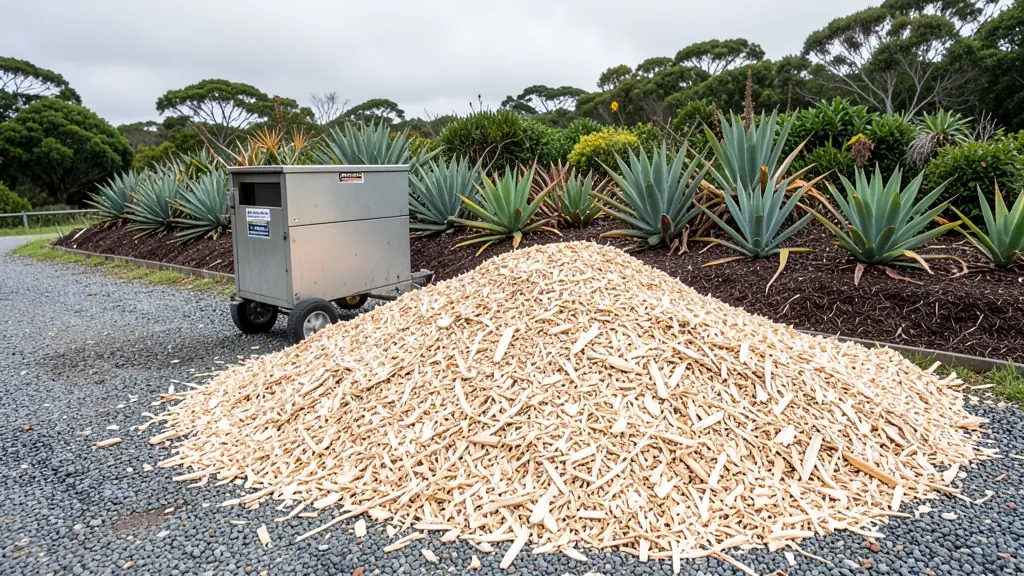
Wood chipping turns a pile of branches into a heap of mulch you can use. A team feeds branches into a chipper on site, so there is nothing to cart away, and the chips go onto beds, paths and around trees. It is often done after trimming or felling, or on its own when you have a pile waiting. Describe the branches and the access, and local teams can quote. Send one free, no-obligation request.
Chipping on site
A chipper is rated by the largest branch it takes. Small machines handle branches of about 5 to 10 cm; towable machines used by tree teams take about 15 cm or more. Thicker wood is cut into logs. The chipper needs to get within a few metres of the pile, so tell the team about gates, steps and slopes. Expect noise for the time it runs. If you would rather run a machine yourself, see wood chipper hire.
Using wood chips as mulch
Wood chips make a good mulch:
- A layer of about 5 to 10 cm keeps soil cool and holds water.
- It suppresses weeds and slowly feeds the soil as it breaks down.
- Keep it a hand's width away from tree trunks and stems to avoid rot.
- Use coarse chips for paths and play areas, finer chips for beds.
Fresh chips can draw nitrogen from the soil surface as they rot, so many gardeners leave them to age in a heap for a few weeks first, or use them on paths.
How much chip you get
Chipping shrinks a pile a lot. A loose heap of branches often chips down to a fraction of its size, so a truck load of brush may give only a few cubic metres of chips. Leafy material gives a finer, wetter mulch; dry branches give coarse, woody chips. If you want the chips, say so; if not, ask whether the team will take them away, which can cost extra, or spread them for you.
Buying mulch and what to avoid
If you have no branches but want mulch, ask the team or local garden sites about buying chips by the load. Ask what the chips are made of. Chips from seeding wattle, pines or other invaders can carry seed into your beds, and chips from diseased trees are best kept away from healthy ones. For waste you do not want chipped, see garden refuse removal.
What to include in your request
- Photos and rough size of the branch pile
- Thickest branch in the pile
- Distance from the gate to the pile
- Whether you want the chips left or removed
- Tree species, especially invaders
Wood Chipping & Mulching for different clients
- Homeowners: chipping branches after trimming and spreading the mulch on beds and paths
- Estates, complexes and body corporates: chipping common area prunings on site and mulching gardens in the complex
- Farms, smallholdings and plantations: chipping orchard prunings and windbreak branches into mulch for trees
- Businesses and commercial property: on-site chipping at hotels and office parks to cut down refuse loads
- Schools, churches and municipalities: chipping park and school prunings into mulch for paths and play areas
- Developers and building sites: chipping cleared brush on a stand instead of trucking it away
- Servitudes and fire breaks: chipping cut growth along servitudes and fire breaks on site
- Tree fellers, landscapers and garden services: tree fellers and garden services chipping on site to save on dumping
Frequently asked questions
How much does wood chipping cost?
Can I use fresh wood chips straight away?
What size branches can be chipped?
Do you supply the chipper and the team?
Wood Chipping & Mulching by province and city
- Johannesburg
- Pretoria
- Centurion
- Midrand
- Sandton
- Randburg
- Roodepoort
- Krugersdorp
- Randfontein
- Germiston
- Boksburg
- Benoni
- Kempton Park
- Alberton
- Vanderbijlpark
- Vereeniging
- Durban
- Pinetown
- Pietermaritzburg
- Richards Bay
- Newcastle
- Ladysmith
- Gqeberha (Port Elizabeth)
- East London
- Kariega (Uitenhage)
- Mthatha
- Cape Town
- Bellville
- Paarl
- Stellenbosch
- George
- Worcester
- eMalahleni (Witbank)
- Middelburg
- Secunda
- Mbombela (Nelspruit)
- Rustenburg
- Brits
- Klerksdorp
- Potchefstroom
- Mahikeng
- Polokwane
- Tzaneen
- Kimberley
- Upington
- Bloemfontein
- Welkom
- Sasolburg