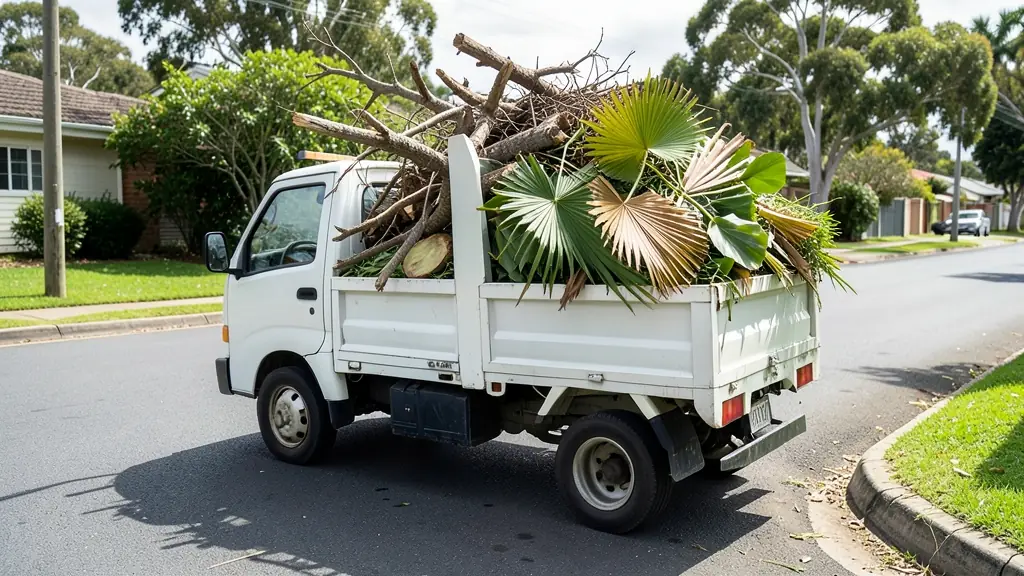
After trimming, a storm or a big garden clean-up, the pile of branches, leaves and grass is often bigger than expected. Garden refuse removal teams load it onto a bakkie or truck and take it to a garden site, a composting yard or a chipper. Prices are by the load, so it helps to know roughly how much you have. Describe the pile and the access, and local teams can quote. Send one free, no-obligation request.
What counts as garden refuse
Garden refuse usually means:
- Branches and prunings from trimming and pruning.
- Leaves, grass cuttings and hedge clippings.
- Palm fronds, old shrubs and dead plants.
- Small logs and stumps, if agreed beforehand.
Most garden sites will not take builders' rubble, soil, plastic bags, paint or household waste mixed in. Keep these out of the pile, or tell the team so they can price a separate load. Heavy logs and stumps also weigh far more than a bakkie full of leaves.
Bakkie or truck: sizing the load
A bakkie load is fine for a few bags of leaves and a small heap of prunings. A trimmed shade tree or a season of hedge cuttings usually needs a truck. As a rough guide, a typical truck takes about 6 m³, which is a heap about 3 m long, 2 m wide and 1 m high once branches are cut and packed. Loose branches take far more space than you think; cutting them shorter or chipping them can halve the volume. Ask whether the team cuts and packs or only loads what is ready.
Sorting and composting
Sorting saves money. Leaves and grass cuttings make good compost if you have space for a heap; branches can be chipped into mulch for beds. Keep invasive plants that carry seed, such as seeding wattle, apart and ask the team to take them away rather than composting them. Many municipalities run garden refuse sites where residents drop off clean garden waste, often free for small loads; check the rules for yours.
Access and timing
Tell the team where the pile is and how far it is from the gate. A heap at the kerb loads in minutes; carrying branches through the house or up steps from a back garden takes much longer. Do not block the pavement for days, and keep piles away from walls in a dry winter in case of fire. After tree trimming, ask whether removal is already in the quote.
What to include in your request
- Photos of the pile from two sides
- Rough size: length, width and height
- What is in it: branches, leaves, logs, stumps
- Distance from the pile to the gate
- Whether branches must be cut up first
Garden Refuse Removal for different clients
- Homeowners: clearing branches, leaves and old shrubs after trimming or a big garden clean-up
- Estates, complexes and body corporates: regular loads of garden waste from common areas and gardens in complexes
- Farms, smallholdings and plantations: removing prunings and storm branches from around the homestead and sheds
- Businesses and commercial property: clearing garden waste from office parks, hotels and shopping centre grounds
- Schools, churches and municipalities: removing branches and leaves from school grounds, parks and church gardens
- Developers and building sites: clearing garden waste from a stand before builders and rubble arrive
- Servitudes and fire breaks: removing cut growth from servitudes and fire breaks after clearing
- Tree fellers, landscapers and garden services: garden services sending loads to a refuse remover instead of running a truck
Frequently asked questions
How much does garden refuse removal cost?
How do I know how many loads I have?
Can I put soil and rubble in with the garden refuse?
Do you collect the refuse?
Garden Refuse Removal by province and city
- Johannesburg
- Pretoria
- Centurion
- Midrand
- Sandton
- Randburg
- Roodepoort
- Krugersdorp
- Randfontein
- Germiston
- Boksburg
- Benoni
- Kempton Park
- Alberton
- Vanderbijlpark
- Vereeniging
- Durban
- Pinetown
- Pietermaritzburg
- Richards Bay
- Newcastle
- Ladysmith
- Gqeberha (Port Elizabeth)
- East London
- Kariega (Uitenhage)
- Mthatha
- Cape Town
- Bellville
- Paarl
- Stellenbosch
- George
- Worcester
- eMalahleni (Witbank)
- Middelburg
- Secunda
- Mbombela (Nelspruit)
- Rustenburg
- Brits
- Klerksdorp
- Potchefstroom
- Mahikeng
- Polokwane
- Tzaneen
- Kimberley
- Upington
- Bloemfontein
- Welkom
- Sasolburg