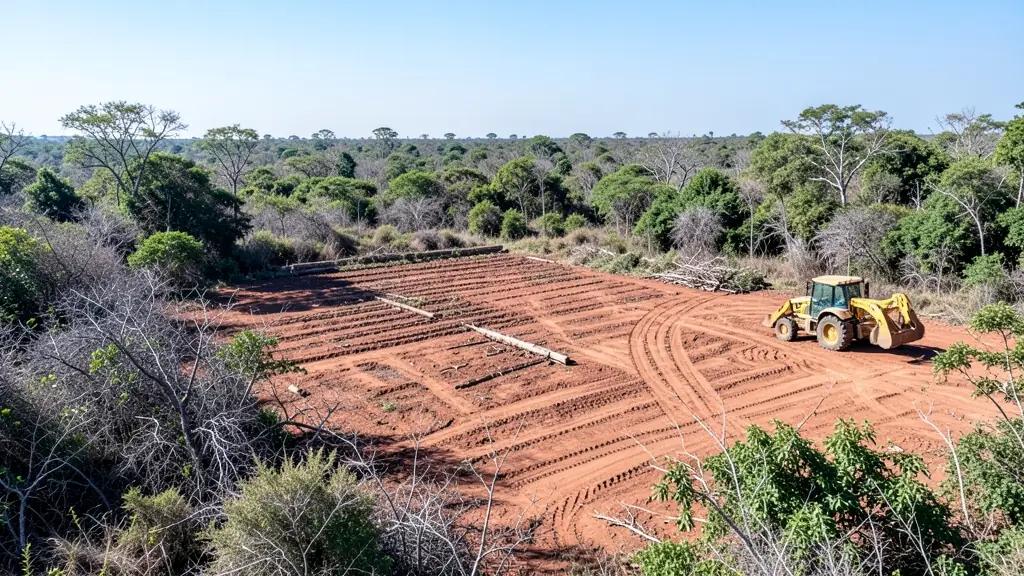
Bush clearing and land clearing take a stand, plot or farm camp from overgrown to workable. The job can mean cutting scrub and small trees, felling bigger trees, digging out stumps, removing rubble and old fencing, and carting it all away or chipping it. Before any machine goes in, check for protected trees, listed invaders and local rules. This page covers planning a clearing job, machines, what to do with the waste, and cost per hectare. Send one request and local teams will quote free, with no obligation.
Plan before you clear
Walk the land first and decide what stays. Good indigenous trees give shade and value, and some are protected under the National Forests Act, so check whether any tree on the land is protected before it is cut. Listed alien invaders such as wattle and some gums may need controlling, so check the listing for your species and area. Clearing large areas of indigenous vegetation may need environmental approval, so ask your municipality or provincial environment department before you start on a big job. Mark boundary pegs, wells, pipes and cables.
Hand crews, TLBs and other machines
The right method depends on the density and size:
- hand crews with chainsaws and brush cutters for light scrub, steep ground and areas with trees to keep
- a TLB to pull out shrubs, dig out stumps and load trucks
- a tracked excavator or bulldozer for dense bush and large areas
- a mulcher or chipper to turn branches into mulch on site
Many jobs combine these: a crew fells the trees, a machine pulls the stumps, a truck carts the rest away. Larger trees are felled first; see tree felling.
Rubble, branches and burning
Overgrown stands often hide old building rubble, concrete, fencing wire and dumped waste. Mention it in your request: rubble is loaded and carted separately and goes to a different site from green waste. Branches can be chipped, stacked as brush piles for wildlife on farms, or carted away. Burning is controlled by local fire rules and fire protection associations, and often needs a permit or is banned in dry months. Check before you burn, keep fire breaks, and never burn near buildings or in wind.
Follow-up after clearing
Cleared land seldom stays clear. Wattle, gums and many other species resprout from stumps and roots, and seed in the soil germinates once the light reaches it. Plan follow-up visits to cut or treat new growth, especially in the first summer. See alien tree removal.
What to include in your request
- Size of the area in square metres or hectares
- How dense the bush is, with photos
- Trees to keep and trees to remove
- Any rubble, fencing or dumped waste
- Access for a TLB and trucks
Land & Bush Clearing for different clients
- Homeowners: an overgrown stand or back yard cleared of scrub, small trees and old rubble
- Estates, complexes and body corporates: vacant stands in an estate cleared to meet the estate's upkeep rules
- Farms, smallholdings and plantations: camps cleared of wattle, gums or encroaching thorn bush, with follow-up for regrowth
- Businesses and commercial property: vacant land beside premises cleared to cut fire risk and dumping
- Schools, churches and municipalities: parks, verges and school grounds cleared of bush, invaders and dumped waste
- Developers and building sites: a stand cleared of trees, stumps and rubble before surveying and building
- Servitudes and fire breaks: servitudes and fire breaks cleared of bush and trees on a regular cycle
- Tree fellers, landscapers and garden services: garden services teaming up with a TLB operator for a large clearing job
Frequently asked questions
How much does land clearing cost per hectare?
Do I need a permit to clear land?
Is tree felling and rubble removal done by the same team?
How do I get bush clearing quotes?
Land & Bush Clearing by province and city
- Johannesburg
- Pretoria
- Centurion
- Midrand
- Sandton
- Randburg
- Roodepoort
- Krugersdorp
- Randfontein
- Germiston
- Boksburg
- Benoni
- Kempton Park
- Alberton
- Vanderbijlpark
- Vereeniging
- Durban
- Pinetown
- Pietermaritzburg
- Richards Bay
- Newcastle
- Ladysmith
- Gqeberha (Port Elizabeth)
- East London
- Kariega (Uitenhage)
- Mthatha
- Cape Town
- Bellville
- Paarl
- Stellenbosch
- George
- Worcester
- eMalahleni (Witbank)
- Middelburg
- Secunda
- Mbombela (Nelspruit)
- Rustenburg
- Brits
- Klerksdorp
- Potchefstroom
- Mahikeng
- Polokwane
- Tzaneen
- Kimberley
- Upington
- Bloemfontein
- Welkom
- Sasolburg